

Slow-Cooked Lamb + Bitter Greens Stew
A bowl that works the entire digestive relay — from stomach acid activation to colonic elimination.
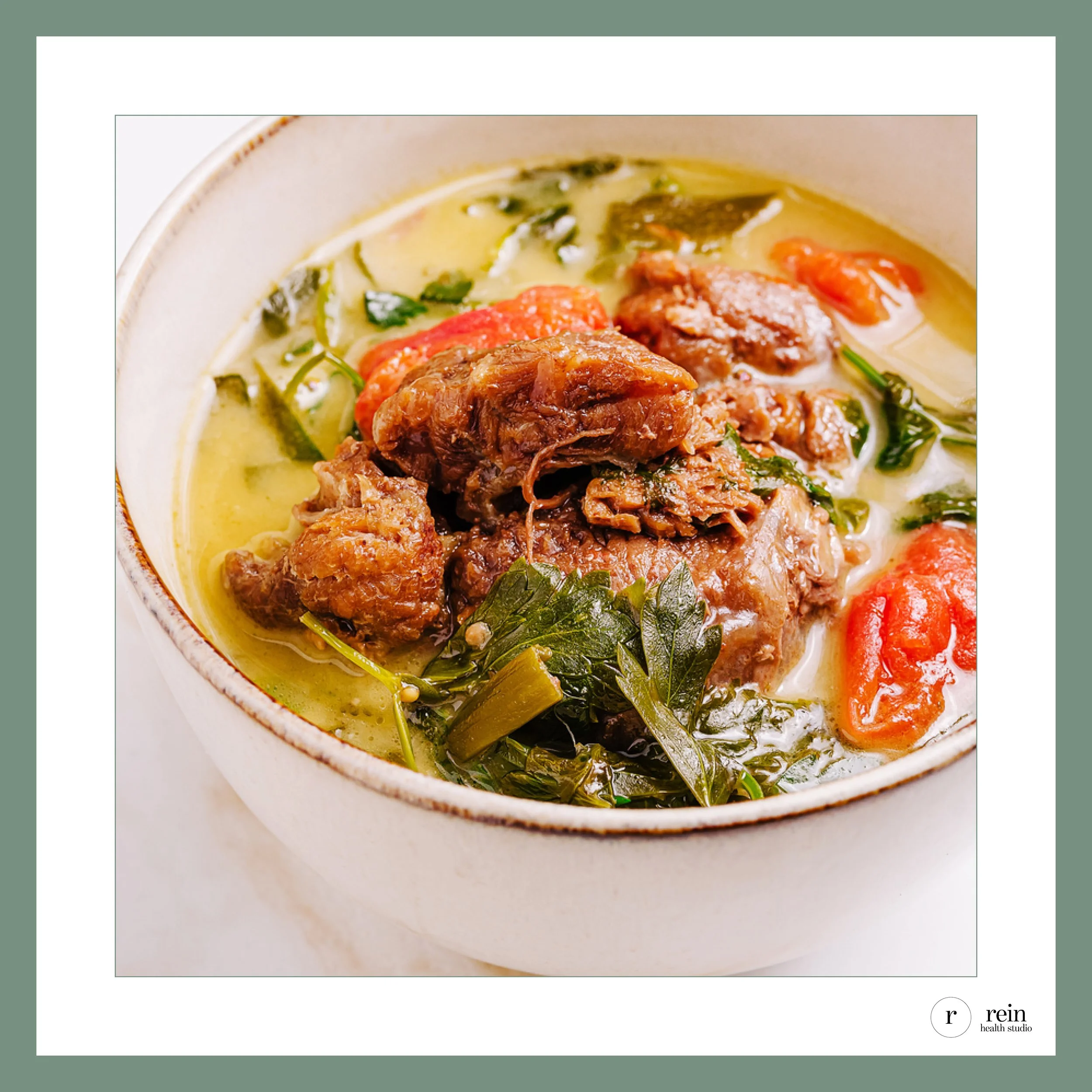
Slow cooking breaks down connective tissue into gelatin, which coats + soothes the gut lining, reducing intestinal permeability + supporting the absorptive surface the small intestine depends on (Tortora + Derrickson, 2017). The collagen released during the long cook provides glycine — critical for gut barrier repair + gastric acid production. Lamb delivers the full amino acid profile required for digestive tissue maintenance + gut wall immune function. Bitter greens wilted into the broth stimulate bile release from the gallbladder + enzyme output from the pancreas, priming fat + protein digestion throughout the meal. Tomatoes add vitamin C that enhances iron absorption in the small intestine, while garlic's fructooligosaccharides feed the colonic microbiome at the final stage of the relay.
Slow-Cooked Lamb + Bitter Greens Stew
800g lamb shoulder, bone-in if possible
2 tbsp olive oil
1 large onion, roughly chopped
4 cloves garlic, smashed
2 large tomatoes, roughly chopped
4 cups chicken or lamb broth
2 large handfuls bitter greens (mustard greens, kale, or spinach)
1 tsp ground cumin
1 tsp ground coriander
Sea salt + cracked pepper, to taste
Optional: squeeze of lemon to finish
Benefits
Lamb → complete bioavailable protein supports digestive tissue maintenance + gut wall immune function
Slow-cooked collagen → gelatin soothes the gut lining; glycine supports gastric acid production + barrier repair
Bitter greens → stimulate bile release + pancreatic enzyme output throughout the meal
Tomatoes → vitamin C enhances iron absorption; acidity supports gastric pH
Garlic → fructooligosaccharides feed the colonic microbiome at the final stage of the digestive relay
Broth → minerals + gelatin support gut lining integrity throughout the digestive tract